Becoming an Engineer

Becoming an Engineer

In the first session of an engineering class I took during my engineering program, a fellow student asked our professor, “why aren’t you teaching us the code?” The professor’s reply was “I’m teaching you engineering.” This question posed to a professor came up again in my upper engineering class and we got the same answer: “I’m teaching you engineering.” This exchange always puzzled me until I started practicing engineering. I discovered that what he implying was about solving problems that had consequences for public safety.

In this discussion of “What is the Solution?” let’s begin by considering some historical perspectives. The concept of “An Engineer’s Coffee Break” is based on an open dialogue about an observation that results in a solution. This can be traced back to 17th Century England’s early coffee house traditions. An example of this environment is a notable meeting between three Royal Society members, Christopher Wren, Robert Hooke and Edmond Halley, and their discussion regarding an observation of celestial motion(s) as a function of the “inverse square law,” but needed a proof (The 4D Solution). The Royal Society’s motto is “Nullius in Verba” (Latin for “take nobody’s word for it”). The solution was Isaac Newton’s “Philosophiae Naturalis Principia Mathematic,” published July 5, 1686.

OK, let’s begin.

Let it Walk

The 4D Solution – “Let it Walk” is primarily about a publication I wrote with a colleague titled “Seismic Scaffolding Concerns? Let it Walk,” (Nuclear Plant Journal, May-June 1990, ISSN: 0892-2055) which in a small part was in response to the Three Mile Island accident on March 28, 1979 and the Chernobyl accident on April 26, 1986, both of which changed the nuclear industry’s operations.

For example, during the 1980s, concerns were raised regarding the practice of using temporary work platforms such as scaffolding that were erected near “Safe Shutdown Equipment” in a nuclear power plant. The problem is that supporting these temporary scaffolding by securing against a seismic event, by attaching to either the containment building structure or adjacent components, could have these system’s design basis and/or operations, potentially resulting in a “Beyond Design Basis Accident.”

The 4D solution is about determining the relative response for a freestanding object(s) during an earthquake a colleague of mine had provided a video of an office during the Kobe earthquake in 1995. This video changed the Fort Calhoun Plant Committee’s perspective about “letting it (the scaffolding) walk.” I later used this video as a basis to communicate this concept. When presenting this information to the board, it was obvious that the perspective of letting temporary work platforms system slide back and forth was reasonable and therefore accepted by the committee. Matt gave me a new perspective of engineering. His communicating the information in this manner provides a perspective of what can be achieved by simple example.

Let’s continue.

The “Aha” Moment

The “aha” moment is when you discover the cause for an unexplained condition. In the practice of engineering we use the principles of mathematics, science, all available information, and common sense (common to). Mathematics and science are based on proven techniques that are relevant to specific assumptions. The availability of information such as current loading, support strength, type of material, variability of site conditions, etc. is not always available and assumptions are made based on your education, knowledge and experience. Common sense can be complicated, as it depends on how you communicate the issues to a broader audience. This can result in a discussion of what is “common to” the individuals’ knowledge and experience and what is important.
Generator Haul Route

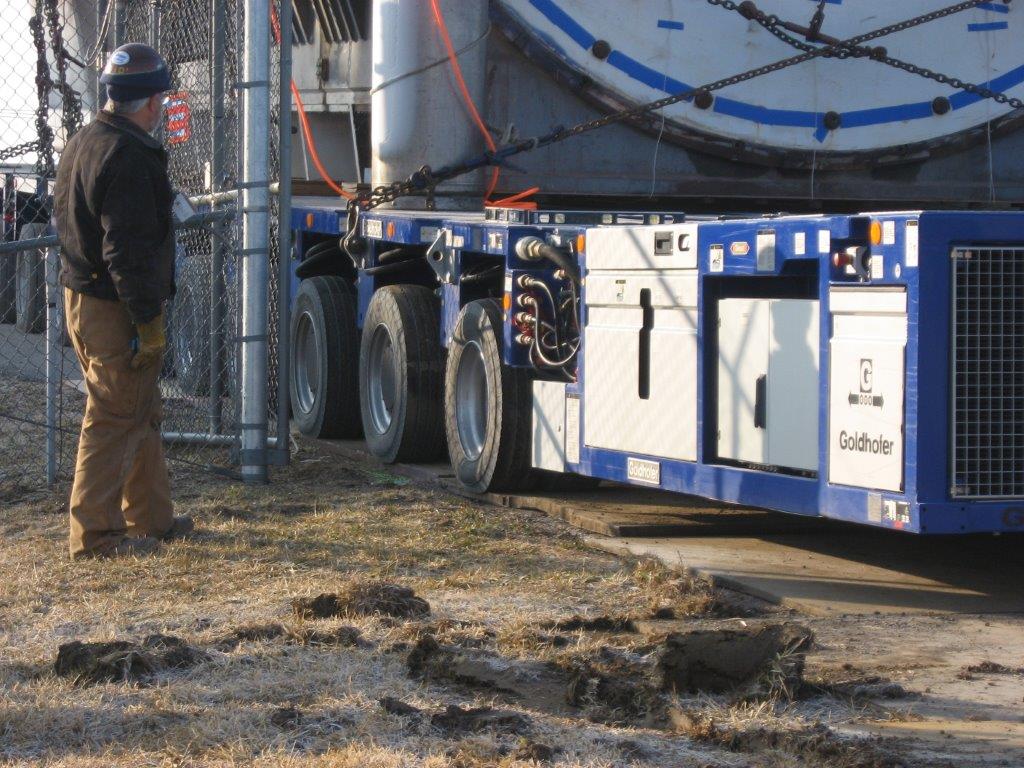
In my experience as a practicing engineer, an answer to a problem is not always immediately apparent. In March of 2008, a generator transport activity during an unusually rainy season resulted some road damage. This unexplained condition is based on a road segment with adequate drainage, loading capacity and additional surface stiffness from 1” plates. The haul route for this move of the generator started at the rewinding staging area concrete pad and surrounding yard area and roadway to the main road that was supported by 4” base and 2” surface coarse of crushed limestone gravel. The road from the staging yard to the main road was unspecified asphalt coarse. The road damage only occurred at the transition from yard to the asphalt road where the 1” plates were laid for additional load distribution. The main road is a standard asphalt pavement with 1-1/2” plant mixed BIT surface, coarse 1-1/2” mixed BIT binder and 6” aggregate base coarse and was the original haul route for the site excavation. The access road to the rewinding building was on 3” coarse gravel. Finally, the plant original site subgrade was removed, dewatered and replaced with highly compacted river sand.

Let’s continue.

Stater Large Project Task

The Innovation in Managing Material Aging (MMG) for the next generation of engineers requires a different perspective of the constraints and nature mapping elements for a “user-centered design.” This means the perceptible affordance has to be transparent to an uninformed user. The initial information will have to be basic, leading the user into next steps of understanding with clear guidance of the current information/state and hints to next available actions. In addition, there also needs to be a historical perspective of the design, construction and operational perspective of the information being provided. The information has to be clear, easy to understand, and offer a verifiable check of any solution presented.

Appling Technology used the original Seal Shell-2 program developed by the Atomic Energy Commission that improved on the Love-Kirchhoff hypotheses limitation relative to the accuracy of stresses, strains, deflections, and reactions in thick shell of revolution with axi-symmetric loading (temperature, pressure, circumferential forces and moments). The program’s methodology is based on an ingenious and well-developed algorithm for determining the stress distribution as proposed by the Love Kirchhoff hypothesis.

A Marmaduke Story

Inspector Slag looks up as Marmaduke the Radiation Protection Technician begins the entry briefing. “It is late in this refueling outage,” he says, then pauses and slowly sips his coffee, “and we need to inspect the Sand Pocket Drains, deep inside the Reactor Vessel Containment Building and Torus cavity…”

Okay, being an engineer is sometimes very much like “The Maltese Falcon” detective stories where Sam Spade investigated the scene, gathered evidence, researched the facts, solve the mystery and apprehend the culprit.

In 1980, the Nuclear Boiler Water Reactor industry discovered wall thinning of the drywell. A permeability coefficient of 0.84 in/min and represents a flow rate conservatively at 9.8 in3/min (0.3 gals/hr).

In the case a single Drywell sand pocket drain line is found to be obstructed, then the potential exists for a buildup of moisture in the immediate sand pocket area. However, because of the concentric continuity of the sand pocket design and as long as adjacent Drywell Sand Pocket Drain line(s) are functional, any significant moisture would be drained by these nearby lines, removing leakage water and precluding any potential impact the Drywell liner. As previously demonstrated, having four of the eight Drywell sand pocket drain lines functional was sufficient to preclude an environment that could lead to loss of material to these inaccessible areas of the drywell bio-shield liner.

The worst-case condition is when all lines are plugged and subsequently the air gap and sand pocket is full of pure water. This condition does not challenge the primary design function for stress distribution of the Drywell liner. However, this pure water environment condition for a non-alloyed material (ASTM SA 516) does result in an active corrosion mechanism and has the potential for material loss of about 25 mills/year, excluding any additional mechanisms.

When considering the industry experience, it would suggest that even under a worst-case general area material loss condition of about 25 mils (0.025 inches) assumed to occur over an operating cycle, there would be an insignificant challenge to the integrity of the Drywell liner shell, which has a nominal thickness of 1.5 inches.

Therefore, even if the worst-case rate of corrosion were assumed since the last inspection, the loss would be minimal.

In August of 2014 I was asked to independently review another site’s generator and transformer project for their heavy load transport activity. Any heavy load transport review must start with determining the site’s geological relationship to the underground structure with a focus on structures, system and components using the Boussinesq method to determine the depth of significant influence (DOSI) that “The depth DS is a finite depth below which there are no significant strains in the soil mass due to the loads imposed at the surface.” (FHWA NHI-0The bottom surface layer is described by (Yoder and Witczak). However, a very important fact that should be clearly understood by the reader is even though stiffer material reduces the risk associate with a sub-grade mode of distress, such as shear, the presence of this stiff layer brings about an increase in the tensile stress magnitude at the bottom of this layer as well as a mark increase in the horizontal shear stresses. Thus, a subsequent design analysis is required to ensure that both the shearing resistance and the flexure resistance of this stiff layer are great enough to sustain these higher stress condition
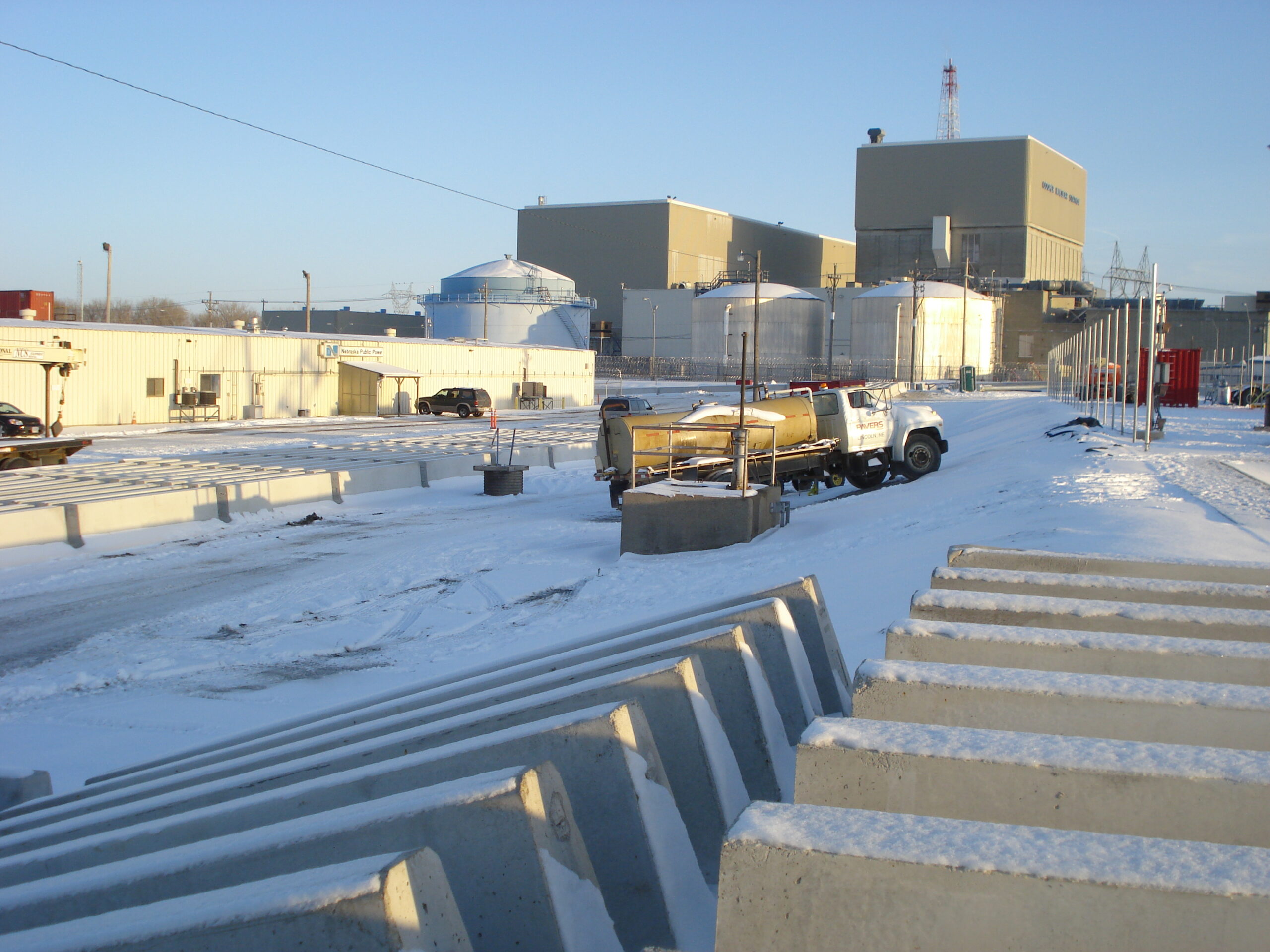
The transport vehicle crew’s experience for a wet soil condition was to apply a steel plate to increase sub-soil stiffness. However, the unspecified asphalt road horizontal shear and flexure resistance was not adequate. In addition, the sub-grade crushed limestone gravel was capable of supporting the transport vehicle loading in wet asphalt road distress, a.k.a. the “Aha Moment.” The decision was based on only one engineering principle that was common to the crew’s experience that needed “The 4D Solution” to understand all loading conditions.

Another Perspective

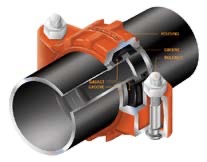
I was asked by a colleague to go to the plant and look at the floor of intake structure’s emergency power room. The problem was that a water line from the discharge area had been welded into the emergency power room. A specific issue was that you couldn’t get access to the other side of the wall to repair this line because it was always flooded. The standard fix for this scenario is to drill pilot holes around the side and then pump the water out of the room. I was able to find a device that I could use to clamp a new line to the end of the water line that isolated the power room from flooding – simple fix. Later, the plant was flooded completely except for this area; see fix below as defined by the ASME code.
Fatigue Monitoring Desktop Guide
Woods, K. June 24-28, 2012 (Conference Proceedings) “Fatigue Monitoring Desktop Guide,” ICAPP 2012, Nice, France.

This new perspective provides a different approach to cycle counting that incorporates all of the information about the material conditions. This approach goes beyond the consideration of a static analysis and includes a dynamic assessment of component health, which is required for operating plants. This health definition should consider fabrication, inspections, transient conditions and industry operating experience. In addition, this collection of information can be transparent to a broader audience that may not have a full understanding of the system design or the potential causes of early material degradation. This paper will present the key points that are needed for a successful fatigue monitoring desktop guide.

I. Introduction

What defines a successful fatigue monitoring desktop guide? This statement in essence provides a template of the primary elements for this discussion on the design philosophy for the development of a MMG (Managing Material Aging) program. The aspect of successful is really a consideration for “Affordances,” which is simply the quality of the program being used by an individual(s).

This discussion will begin with what constitutes a successful MMG program. In order to define these characteristics, it will be necessary to have a perspective of the individual(s) who will be utilizing this MMG program. This insight is rooted in the originators’ theme for the development of American Society Mechanical Engineering (ASME) Boiler and Pressure Vessel Code Section III Rules for Construction of Nuclear Vessels1 that considered the needs of users, manufacturers, and inspectors as well as good practices for owners.

The original perspective of applying “fatigue” by ASME code is a design approach for assuring material ductility. However, the current industry emphasis is to use this methodology and/or a modified version of the ASME code as a tool to determine time limiting aging analysis (TLAA). This discussion will present a perspective on how this method can be applied effectively.

The key to an effective TLAA is the availability of information that accurately presents the current material condition for future projection of component life. The challenges in this approach ar9G program should be to provide a means to acquire and input of legacy knowledge of past events from individual plant personnel. This discussion will present an approach in achieving this theme of affordance for a MMG program.

II. Successful MMG Program

To establish a successful MMG program we need to understand the term “affordance” coined by James J. Gibson2, which is perception drives action. This concept suggests that a particular environment as presented to the user achieves either a perceptible, hidden or false affordance. In the case of perceptible affordance the user achieves the correct action(s), and in hidden or false affordance results in mistakes or unintentional action(s) by the user. For example, it has been suggested that a contributing factor of Three Mile Island’s (TMI) accident was the plant operators’ false assessment of an actual system condition. A finding from the President’s Commission³ reads:

“However, operator confusion, which was evident during the accident, may have resulted in part from the control room layout and design or from equipment malfunctions which occurred.”

This event represents a hidden and/or false affordance as the operators’ false perception of the current state resulted in incorrect actions. This confusion was identified as related to the arrangement of emergency system controls, number of alarms (1500), indicator color lightness and/or valve position indicators, etc.

In order to achieve a correct perception, it is necessary know the MMG program user. This user can be considered the fourth-generation workforce for the nuclear industry. We consider the first-generation (Criticality) at the first-self sustained nuclear reaction to be the Chicago Pile-1 in 1942, by Enrico Femi and Leo Szilard who were 41 and 44 years old, respectively. This effort was based on Albert Einstein theory E=Mc2, who was 64 years old, and confirmed by Lise Meitner and Otto R. Frisch, who were 64 and 38 years old, respectively. The second-generation (Commercialization) starts with the first nuclear submarine, the USS Nautilus commissioned in 1954 and the Shippingport commercial power plant in 1957. Admiral Hyman G. Rickover, who was 54 years old, supervised design, construction, testing, training and operations for both power plants. The third-generation (Peak) began with the height and decline of commercial nuclear power, which can be marked with the TMI commercial reactor accident of 1979. The current projection is that most of the nuclear workforce will have reached age 50 years by the end 2010. This information provides some perspective of the growth of nuclear technology and development. The first generation was exceptionally fast paced, and the second generation was a period of steady growth, with both generations’ workforce interfacing with their senior counterparts to exchanging knowledge and experience. The third generation is relatively from a stagnant growth period and can be considered as a re-learning, based on operational experience from the first and second-generation theory, design and failures such as the Sodium Reactor Experiment at Santa Susana, California (first commercial and accident). This period can also be considered as enhancements of the process and by better understanding of the design limitations. This period for development of the workforce is an obvious problem in regard to the transfer of skills and/or technology, as basically knowledge has been lost. Finally, we can assume the fourth generation has limited mentoring and subsequently is inexperienced of the reactor pressure boundary components, construction, and numerical skills all of these are based on computer program(s) versus a complete understanding of the theory, design, operational concepts and accidents other than through their basic education.

This means the perceptible affordance has to be transparent to an uninformed user. The initial information will have to be basic, leading the user into next steps of understanding with clear guidance of the current information/state and hints to next available actions. In addition, there also needs to be a historical perspective of the design, construction and operational perspective of the information being provided. The information has to be clear, easy to understand, and offer a verifiable check of any solution presented. Finally, a successful MMG program is one that is not only used for fatigue evaluation, but also is the basis for quick resource information relative to the reactor pressure boundary components that can be considered a “user-centered design⁵”. This approach should:

  • Make it easy to determine what actions are possible at any moment (make use of constraints).
  • Make things visible, including the conceptual model of the system, the alternative actions, and the results of actions.
  • Make it easy to evaluate the current state of the system.
  • Follow natural mappings between intentions and the required actions, between actions and the resulting effect, and between the information that is visible and the interpretation of the system state.

The user-centered design is the basic principle, applied today to nuclear plants control room(s) as a lesson learned from the TMI accident, referred to as Human-System Interface (HSI) Design Review Guide6.

II. Fatigue

Fatigue analysis is considered as a stochastic process, that is to say the behavior is intrinsically non-deterministic or simply an informed guess. This is because of the infinite variations in the forging of metal, fabrication process, test results and operational conditions. This material is characterized as a crystal arrangement (space lattices) of its atoms and is typically classified in three systems such as a cube, tetragonal and hexagonal. However, this crystalline arrangement has imperfections such as the grain bounder region, foreign ions, grinding, machining, polishing, dislocations (alignment of ions) and mosaic structures (titled blocks). The machining or forming of steel into a specific geometry will also result in a variety of different residual stress. An example of this condition is related to the Nuclear Regulator Commission’s (NRC) issuance of EA-03-009 in 2003. This was the result of cracks found in the reactor pressure vessel head penetration nozzles and the subsequent re-issuance in 20048 to define the minimum inspection area as 2 inches above the root and below the toe of the weld:

The general criteria for the inspection area is 3/4 inch or below 20 ksi stresses (mathematical stress concentration), which is considered to be safe below the fatigue endurance limit7. However, change can occur outside of these defined areas as a result of nicks, scratches or machine finish in conjunction with crystalline imperfections and/or environmental effects as suggested by Fred B. Seely:

“The ideal mathematical stress concentration is due only to change in form of the member, whereas the stress concentration determined by the plaster-model method, and also by the repeated-stress (fatigue) method, is influenced not only by the abrupt change in section, but to some (unknown) extent by inherent defects in the material, by slight readjustment of the material due to yielding or flow, and by the orientation of the structural units (crystalline grains in the case of metals) composing the material. In addition, the effective stress concentration may be influenced by so-called skin effect, or surface tension effect, at points of high stress concentration, although little is definitely known about this effect.”

This discussion is still relevant today in considering the interrelationship between corrosion fatigue, stress-corrosion and hydrogen embrittlement10, there have been efforts to defining the crack mechanism.

In this perspective , the ASME code is not based on stress-corrosion methodology, but is based on an endurance limit using an alloy resistant to the environment. The nuclear industry’s 58 years of operational experience would suggest the code’s intent, as a good practice for “integrity of the pressure retaining components”11 has been achieved. However, the industry has experienced susceptible conditions that have resulted in through wall cracking, generally below the critical flaw size as defined by the ASME code. These events have resulted in the introduction of NUREG/CR-690913 that uses a fracture mechanics approach. This approach attempts to define Ford’s relationship between static and cyclic stress corrosion through a crack initiation and propagation model. The challenge to this model is the limited information available, for example on strain amplitude, sulfur content in steel, microstructures for fully reversed cycles, slow strain rate during compressive cycle and orientations on growth rate from the supporting document14 for this regulatory guide. The more current attempt to identify this range through a material degradation matrix, suggests this regulatory guide is a long-term operation that is basically open ended and dependent on the effectiveness of the implementation15. The importance of this discussion is that both of these methodologies are only tools to assist in identifying potential areas of risk. However, the only limitation of the implementation of a MMG program is in not considering other indicators that could change/alter the material susceptibility. Ford’s Modified Venn Diagram provides a great example of perceptible affordance in understanding the range of possible variations to consider.

IV. MONITORING

The aspect of monitoring component health by cycle counting is simplistic and excessively conservative for design, but this approach has the tendency to mask other component’s risk. In this approach, it is critical to understand the difference between actual versus design fatigue load as shown in Figure 3. This diagram shows the feedwater nozzle actual thermal condition during a shutdown event in comparison to the proposed design condition by analysis. The design’s thermal cycle range from 450° F to 300° F versus actual condition of about 50° F for each six cycles is insignificant and can be superpositioned by the ASME code as a single cycle for 300° F. The other significant difference is the strain rate. The design approach applies this as a step change and in actual condition is less than 50°/hr. The challenge here is applying strain per NUREG/CR-6909 that suggests reduction to components cyclic life, in contrast to step change as not being as damaging. The importance of this discussion is that the information being presented in the MMG should consider all available information as well as the intent of each method to be able to determine the component(s)’ general health condition.

The industry’s experience has been more troubled by stress-corrosion (static) than corrosion fatigue (cyclic) condition, considering Ford’s diagram. The NUREG-061916, EA-03-009 order and more currently Information Notice 2011-0417 are conditions of stress-corrosion in a static leg in the reactor pressure vessel and support system with susceptible material. The events leading up to the issuance of NUREG-031320 are due to the industry experience with furnace-sensitized austenitic stainless steel pipe with carbon content greater than 0.03% in a stagnant line of recirculation system for the Boiler Water Reactors. In the case of the Pressurized Water Reactors (PWR) experience with this condition, a classic example is Fort Calhoun Station’s Control Element Drive Mechanism18 spare housing through wall crack in a carbon steel pipe with an induced non-structural stress riser. This was subsequently determined to be a susceptible material condition. The importance of degradation’s life cycle can be defined as simply the incubation period, crack initiation (stress-corrosion) propagation and leakage. This information provided an in-situ definition of PWSCC propagation period that is simply six cycles (operation cycles). In reviewing the PWR industry experience of these events, there is a level of consistency, even across different material and geometries..
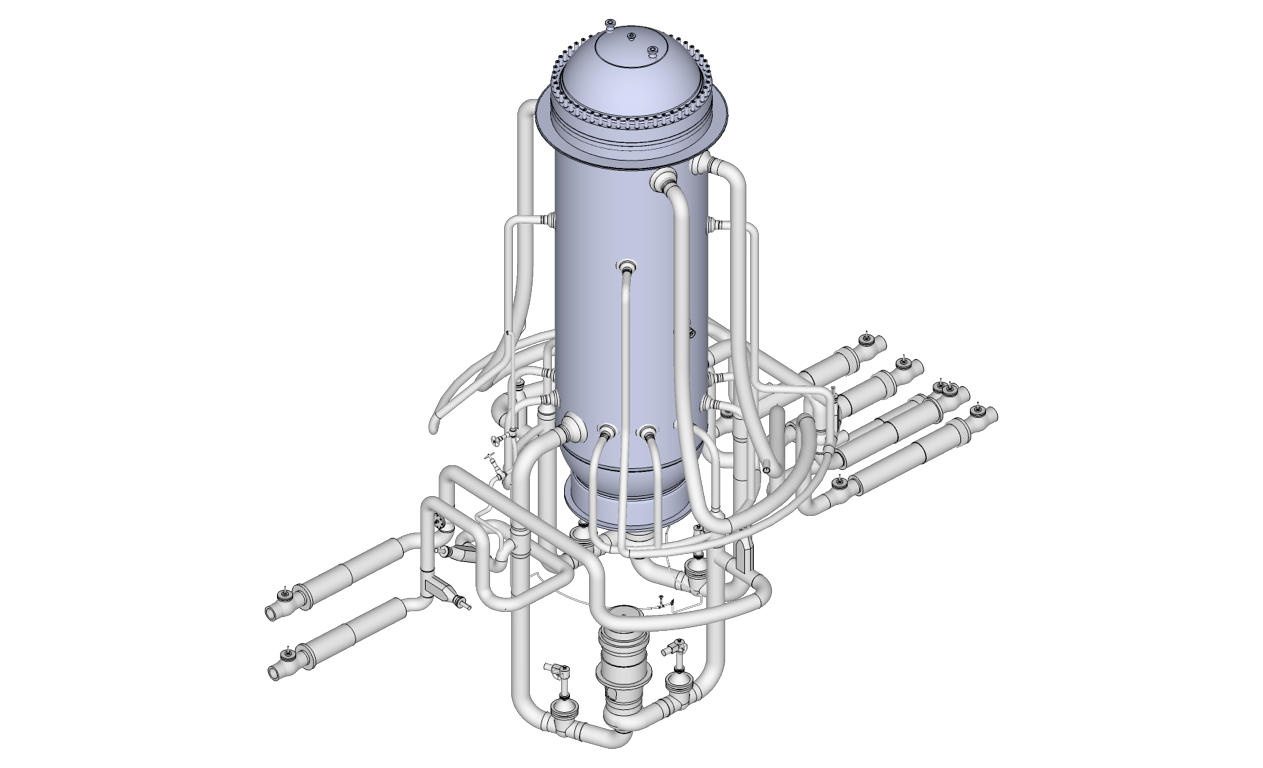
These events all have a precursor condition, such as in the case of Davis-Besse, that represents a failed diagnosis of the spiral wound gasket leakage that started in 1990. In an environment where oxygen can accumulate in a closed system and is under pressure, this gas can migrate through a porous material. This gas will expand as it transition from high to low pressure, and result in somewhat of an explosive that damages the seal and can result in leakage. This oxygen accumulation is the direct result of multiple forced outages between a startup to a refueling outage (operational cycle) and poor venting of a closed system. Another indicator of this condition is boric acid build-up that can result in an abrupt ridge on an exposed penetration housing nozzle surface.

The available monitoring provided by the original design is limited to a few thermal couples at the reactor flange (15), feedwater nozzles (1), vessel wall (6), bottom head (9), and support skirt (6). These locations for monitoring components are based on the analyzed endurance limits that assure achieving the intended cyclic life. The MMG program must extend beyond simple cycle counting in order to be successful in defining a component’s health as demonstrated by the industry’s 54 years of knowledge, practice and experience in design and operation nuclear power plants.

V. Desktop Guide

A desktop guide implies a tool that is accessible and user friendly. The success of this tool, as discussed previously, is in meeting the user’s perceptible affordance (corrected actions) to achieve an intended goal (safe operation). A successful MMG program incorporates system, design and mechanism(s) that provide knowledge to a broad audience and achieves a reasonable and cost effective management of component(s) heath. This implies that mitigation and/or the replacement of component(s) occurs in a timely and safe manner. Simile cycle counting is not enough.

A MMG program should portray Ford’s consideration for both stress-corrosion and corrosion fatigue.

A MMG program should be a “user-centered design” that includes an introduction a perspective of the system boundary components (constraints and actions) being managed by the program. This should provide an immediate understanding of the basic information as geometry, system relationship, material and component type, component identification, installation date and etc. to a broad audience. This introduction would explain to the user what possible actions are available or the basic constraints of the program. The two primary MMG constraints and/or range of possibilities for monitoring health are basically the static and cyclic stress.
The static stress is the environmental condition that affects susceptible material by depleting metal ions that are replaced by contaminants that result in surface embrittlement. In this case, the MMG program should provide visual tools to assess the possible condition for a low flow and high temperature impact on component(s) risk. A classic example of this effect is the relationship of chloride and oxygen concentration on different stainless steels presented by B.M. Gordon19.

This curve provides a simple comparison of two primary contaminants related to intergranular and transgranular attack that results in stress corrosion cracking. It is clear from this information that furnace-sensitized austenitic stainless steel is at risk and consistent with the BWR industry experience per NUREG-0313. The obvious information needed for component(s) monitoring is the system flow, operating conditions and an understanding about the water chemistry of each system and location. In the case where information is not available, a reasonable assumption(s) will have to be made about actual conditions. In addition, the material composition characteristics such as general crystalline or grain structure, and susceptibility should be known. This information should also include system(s) and/or component(s) plant specific problem areas and industry experience.

The cyclic stress is the other part of this MMG program’s spectrum, which is the current industry’s focus. The importance of monitoring has varied over the life of most plants. This single issue provides an initial challenge in the vastness and/or availability of past events and actual cyclic conditions information that is not electronically available. Most of this information is only available in the form of strip charts, magnetic tape reels, operator logs, microfilm, etc. In addition, the standard reporting format and terminology has somewhat changed over time. In this regard it is necessary to reinstate the ASME code, design specification, design stress report (DSR) and safety analysis intent of “natural mapping” for cyclic loading events. For example, the approach to fatigue design/evaluation is the consideration of fatigue loads (cycle) that are a constant amplitude loading varying from minimum {valley} to maximum {peak} back to minimum {valley} load. In addition, fatigue loads or constant amplitude such that all peak loads are equal and all valley loads are equal as defined by ASME III N-412(n)1, “Operational cycle”:

“An operational cycle is defined as the initiation {valley} and establishment of new conditions {peak} followed by a return to the conditions {valley} that prevailed at the beginning of the cycle {constant amplitude}.”
There are only three types of operational cycles:

  1. “Startup-shutdown cycle, defined as any cycle which has atmospheric temperature and/or pressure as one of its extremes {valley} and normal operation conditions as its other extreme {peak}.”
  2. “The initiation of and recovery {load pairs} from any emergency or upset condition that must be considered in the design.”
  3. “Normal operating cycle, defined as any cycle between startup and shutdown which is required for the vessel to perform its intended purpose.”

This discussion provides natural mapping of the design approach used by the original designers. In addition, it is still current language used for cycle counting and is necessary to define the different events relationships to load pairs for each component. This tool, in conjunction with endurance limits as defined by either the ASME code or NUREG/CR-6909, will provide a component health definition. These components define health condition per ASME code and/or NUREG criteria and are limited without considering the opposite end of spectrum (static stress). This criteria/methodology provided has elements that allow the user to incorporate in-situ conditions by adjusting the fatigue strength or environment factor that will increase or reduce the endurance limit. This single item provides the most important aspect of managing material aging.

VI. Conclusions

In conclusion, this paper provides a perspective of the next generation user of a MMG program desktop guide and some of the constraints and nature mapping elements for a “user-centered design.” It has indicated what should constitute a MMG model for a successful program and/or human-system-interface for a desktop guide. Finally, a successful MMG program has to be more than about simply cycle counting.

Acknowledgments

This reconstitution effort was funded by Nebraska Public Power District as part of the License Renewal Application.

ASME – AMMG – Managing Material Aging
merican Society of Mechanical Engineers
TLAA – Time Limiting Aging Analysis
HSI – Human-System Interface
TMI – Three Mile Island
PWSCC – Primary Water Stress Corrosion Cracking
NRC – Nuclear Regulator Commission
BWR – Boiler Water Reactor
PWR – Pressurized Water Reactor
SCC – Stress Corrosion Cracking
DSR – Design Stress Report

References

  1. Rules for Construction of Nuclear Vessels, American Society of Mechanical Engineers (ASME) Boiler and Pressure Vessel Code, Section III, (1965 and Winter Addenda 1966)
  2. J. J. Gibson, The Theory of Affordances, In R. Shaw & J. Bransford (eds.), Perceiving, Acting and Knowing. Hillsdale, NJ: Erlbaum (1977)
  3. Staff Report To The President’s Commission on The Accident at Three Mile Island, Reports of the Technical Assessment Task Force, Vol. I, U.S. Government Printing Office Washington, D.C. 20402 (1979)
  4. NRC Action Plan Developed as a Result of TMI-2 Accident, NUREG-0660, Vol. I, U.S. Nuclear Regulatory Commission Washington, D.C. 20555 (19905. Don Norman, The Design of Everyday Things, Basic Books, New York (2002)
  5. Human-System Interface Design Review Guidelines, NUREG-0700, Rev. 2, U.S. Nuclear Regulatory Commission Washington, D.C. 20555 (2002)

Some Famous Engineers Lost in 2017

Note: Thanks to Wikipedia and American Institute of Steel Construction for the resource information that follows:

This year we lost a friend and colleague that was an influential mentor to all that knew him Omer W. Blodgett.

Weapons of Mass Destruction

Dr. William Ames “Bill” Davis Jr. (July 9, 1927 – May 4, 2017) was an engineer and distinguished leader in Ballistic Missile Defense (BMD) for the United States Army at Redstone Arsenal in Huntsville, AL. Davis was an inaugural member of the United States Senior Executive Service (SES) and recipient of numerous accolades and awards from the Army, including the Meritorious Civilian Service Award (1980) and the Department of the Army Decoration for Exceptional Civilian Service (1982).

Inventor or Smasher of Cool Stuff

France Rode (November 20, 1934 – June 7, 2017[1]) was a Slovenian engineer and inventor best known for his work on the HP-35 pocket calculator. He was one of the four lead engineers at Hewlett-Packard assigned to this project. Rode also invented and created the first workable RFID products: workplace entry cards, for which he held several patents.

Richard E. “Dick” Morley (December 1, 1932 – October 17, 2017) was American electrical engineer who was considered the “father” of the programmable logic controller (PLC) since he was involved with the production of the first PLC for General Motors, the Modicon, at Bedford and Associates in 1968. The Modicon brand of PLC is now owned by Schneider Electric. The PLC has been recognized as a significant advancement in the practice of automation, and has an important influence on manufacturing industry.

Vinod Chandrasinh Chohan (May 1, 1949 – June 12, 2017) was a Tanzanian-born accelerator specialist and engineer. He was a Senior Staff Member at CERN for nearly 40 years.

He held a leading position at CERN’s Antiproton Accumulator, a machine that was part of the infrastructure connected to the UA1 and UA2 experiments, where the W and Z bosons were discovered in 1983. Carlo Rubbia and Simon van der Meer received the 1984 Nobel Prize in Physics for this discovery. Chohan worked closely with the latter on the Antiproton Accumulator.

Chohan was a substantial contributor to the Large Hadron Collider (LHC), leading the team that tested, measured and trained more than a thousand superconducting magnets for the LHC.

During his nearly 40 years as a staff member at CERN he held technical and management positions in beam diagnostics, instrumentation, accelerator studies, controls, the testing of superconducting magnet and safety.

Cool Cars

 Roy Lunn, revered as the godfather of the mid-‘1960s Ford GT40 sports cars that fulfilled Henry Ford II’s vow to beat Enzo Ferrari at his own game, died after suffering a massive stroke at his home in Santa Barbara, Calif. Lunn was 92.

Walter Maynard “Bud” Moore Jr. (May 25, 1925[1] – November 27, 2017) was a NASCAR car owner who operated the Bud Moore Engineering team. A decorated veteran of World War II, he described himself as “an old country mechanic who loved to make ’em run fast”.

Moore served in World War II as a member of the United States Army. A machine gunner, he participated in the Normandy landings as part of the 4th Infantry Division, landing on Utah Beach. After Normandy, he went on to fight in the Battle of the Bulge and ended his military service as a sergeant.

When he returned from the war, he began a career in stock car racing as a crew chief. In the 1960s, he opened Bud Moore Engineering, a team that went on to win three NASCAR Grand National Series championships and 63 races for 37 years until its shutdown in 1999. He was inducted into the NASCAR Hall of Fame in 2011.

Kenichi Yamamoto (1922-2017) was a Japanese mechanical engineer and business executive. He supervised the development of the Mazda Wankel rotary combustion engine, and served as Mazda‘s President (1984-1987) and Chairman (1987-1992).

A Welding Engineer Super Star

Omer W. Blodgett(1917-2017) was a design consultant and mechanical engineer for over 60 years at Lincoln Electric Co. Throughout his long career, his expertise and passion influenced countless welders and engineers around the world.

“If we didn’t have welding today, I think the world would come to a grinding halt,” he once said.

Attended the University of Minnesota, where he earned degrees in metallurgical and mechanical engineering. After graduating from college, he went to work for the Globe Shipbuilding Company, where he refined his skills, learning firsthand how to resolve welding issues like distortion and cracking. There, during World War II, he supervised 400 welders who fabricated 29 all-welded oceangoing ships for the Federal Maritime Commission. In 1945, he met James F. Lincoln, a man who would not only become a lifelong friend but who also encouraged him to come to work for Lincoln Electric.

Omer started with the company that year in a sales position, which he later described as highly educational. While he knew welding from his own experience, this role gave him insight on how others used it. In 1954, he became a design consultant for the company and also worked as a mechanical engineer. By the time he stopped working for Lincoln full-time in 2009, he’d spent more than six decades with the company.

“Is a steel industry hero, and his influence on steel design and construction is incalculable,” commented Carter. “I personally appreciate and regularly remember things he said as he helped me: ‘Always remember that when a change is needed, the codes are the last to hear about it… Design with your head, not your heart…. When you’re trying to solve a problem, walk to the other drinking fountain further down the hall and take the time to think about it more.’ He also told me that the person you are is more important than what you’ve done. Certainly, Omer lived that high ideal in his own life.”

He was a longtime member and contributor to a several professional organizations, including the AWS D1 Structural Welding Committee, the AISC Committee on Specifications and the Welding Research Council (WRC) Task Group on Beam-to-Column Connections. AWS recognized his contributions in 1962, 1973, 1980 and 1983. LeTourneau University presented him with an honorary doctor of science degree. He was recognized as one of the top 125 engineers of the past 125 years by Engineering News-Record in 1999. And he even earned the triple crown of AISC awards: the T.R. Higgins Lectureship Award in 1983, the first Engineering Luminary Award in 1997 (for advancing the art and science of steel construction) and the Lifetime Achievement Award in 1999.


The 4D Solution – Gumshoe

https://youtu.be/ceQQE59M9UQ

Inspector Slag looks up as Marmaduke the Radiation Protection Technician begins the entry briefing. “It is late in this refueling outage,” he says, then pauses and slowly sips his coffee, “and we need to inspect the Sand Pocket Drains, deep inside the Reactor Vessel Containment Building and Torus cavity…” Okay, being an engineer is sometimes very much like “The Maltese Falcon” detective stories where Sam Spade investigated the scene, gathered evidence, researched the facts, solve the mystery and apprehend the culprit.

In 1980 the Nuclear Boiler Water Reactor industry discover wall thinning of the drywell bio-shied liner after 11 years of operation, due to leakage from the cavity seal during refueling operations. This condition was not unexpected by the General Electric original design team for the “Sand Pock Drains”.  However, the “Sand Pocket” functions as one of the structural supports for the drywell, while the air gap provides some independence between the reactor building structure and drywell biological shield wall. The drywell annulus (air gap) is primarily provided to assure no unrelieved deflection resulting from the temporary concrete placement loading during construction.


The Drywell Sand Pocket functions as one of two primary load transfer points to the Reactor Building structure. These two locations are designed to minimize stress concentration, either by reinforcement rings such as on the Drywell cylinder around the stabilizer support or by a sand cushion zone at the Drywell bottom support.   In addition, the sand pocket was specifically designed to prevent water logging based on the depth and width provided. The approximate volume of the sand pocket is 867 ft3, but is occupied by a sand filter (per ASTM G-33 grading requirements) that is 44% void (or 2854 gals) and 55% solids, representing a void ratio of 80%. In the case of leakage into annulus between the Drywell and Reactor Building, this gap also functions as a drain into the sand pocket area through 1” diameter holes spaced at 18” centers (92 holes, total flow area 73 in2). The sand pocket has eight 4”diameter, schedule 40 drain lines (total area 101.84 in2) that discharge into the Reactor Building Torus area with a slope of 1/8.75, which have a permeability coefficient of 0.84 in/min and represents a flow rate conservatively at 9.8 in3/min (0.3 gals/hr).

In the case of a single Drywell sand pocket drain line is found to be obstructed, then the potential exists for a build up of moisture in the immediate sand pocket area. However, because of the concentric continuity of the sand pocket design and as long as adjacent Drywell Sand Pocket Drain line(s) are functional, any significant moisture would be drained by these nearby lines, removing leakage water and precluding any potential impact the Drywell liner. As previously demonstrated, having four of the eight Drywell sand pocket drain lines functional was sufficient to preclude an environment that could lead to loss of material to these inaccessible areas of the drywell bio-shield liner.


The worst-case condition is when all lines are plugged and subsequently the air gap and sand pocket is full of pure water.   This condition does not challenge the primary design function for stress distribution of the Drywell liner. However, this pure water environment condition for a non-alloyed material (ASTM SA 516) does result in an active corrosion mechanism and has the potential for material loss of about 25 mills/year, excluding any additional mechanisms.

When considering the industry experience, it would suggest that even under a worst-case general area material loss condition of about 25 mils (0.025 inches) assumed to occur over an operating cycle, there would be an insignificant challenge to the integrity of the Drywell liner shell, which has a nominal thickness of 1.5 inches. Therefore even if the worst-case rate of corrosion were assumed since the last inspection, the loss of material of the drywell shell would not reach minimum wall thickness or threaten structural integrity.

Inspector Slag slumps into the briefing room chair and turns to Marmaduke. “Thank you for guiding us through the wells of the reactor cavity area.   The mystery of the Sand Pock Drains has been solved and the bio-shield liner-thinning perp has been detained.”

The 4D Solution(s) – Aha Moment

The “aha moment” is when you discover the cause for an unexplained condition. In the practice of engineering we use the principles of mathematics, science, all available information and common sense (common to). In the case of mathematics and science are based on proven techniques that are relevant to specific assumptions. The availability of information such as current loading, support strength, type of material, variability of site conditions, etc. is not always available and assumptions are made based on your education, knowledge and experience. Common sense can be complicated, as it depends on how you communicate the issues to a broader audience. This can result in a discussion of what is “common to” the individuals’ knowledge and experience and what is important.

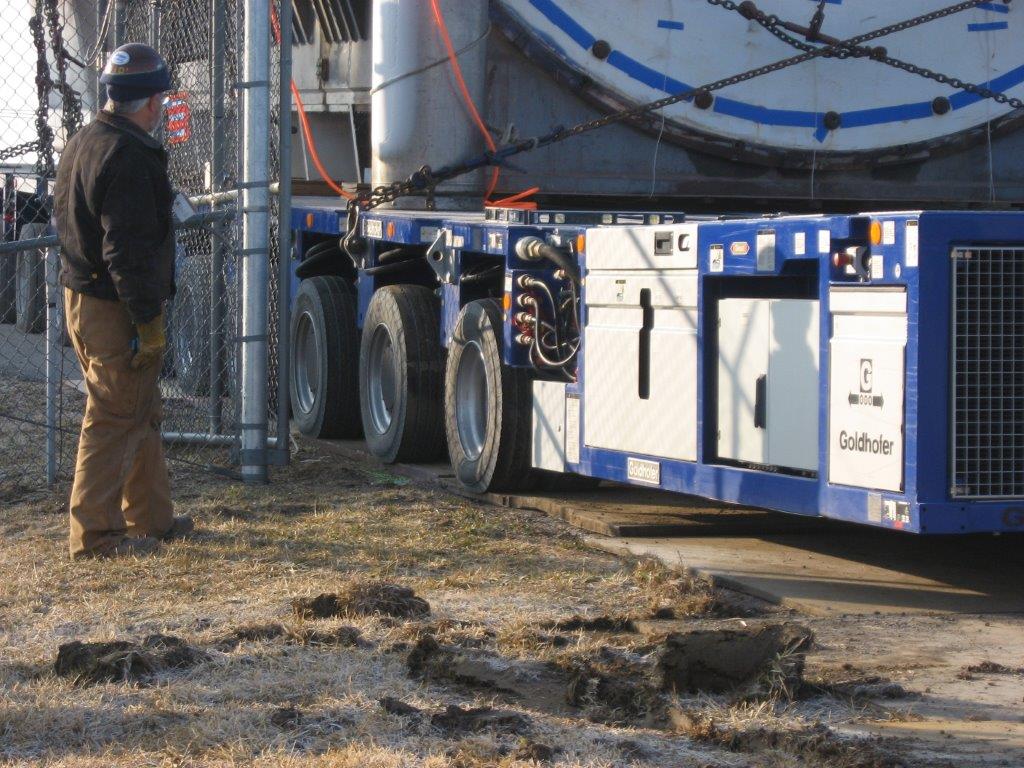
In my experience as a practicing engineer, an answer to a problem is not always immediately apparent. In March of 2008, a generator transport activity during an unusually rainy season occurrence resulted some road damage. This unexplained condition is based on a road segment with adequate drainage, loading capacity and additional surface stiffness from 1” plates. The haul route for this generator move started at the rewinding staging area concrete pad and surrounding by a yard area and roadway to the main road that was supported by 4” base and 2” surface coarse of crushed limestone gravel. The road from the staging yard to the main road was unspecified asphalt coarse. The road damage only occurred at the transition from yard to the asphalt road where the 1” plates were laid for additional load distribution. The main road is a standard asphalt pavement with 1-1/2” plant mixed BIT surface, coarse 1-1/2” mixed BIT binder and 6” aggregate base coarse and was the original haul route for the site excavation. The access road to the rewinding building was on 3” coarse gravel. Finally, the plant original site subgrade was removed, dewatered and replaced with highly compacted river sand that is typical of the power plants industry near a river channels. This loading from the generator and Goldhofer transport vehicle had a total weight of approximately 1.3 million lbs. This loading condition was greater than all previous site-transport. The conclusion of this transport and rigging for the replacement of generator and stator project was a success and the road damage was a minor issue, but was unexplained and contrary to common sense (common to).

In August of 2014 I was asked to independently review another site’s generator and transformer project for their heavy load transport activity. Any heavy load transport review must start with determining the site’s geological relationship to the underground structure with a focus on structures, system and components using the Boussinesq method to determine the depth of significant influence (DOSI) that is: 

“The depth DS is a finite depth below which there are no significant strains in the soil mass due to the loads imposed at the surface.” (FHWA NHI-06-088, 2006)

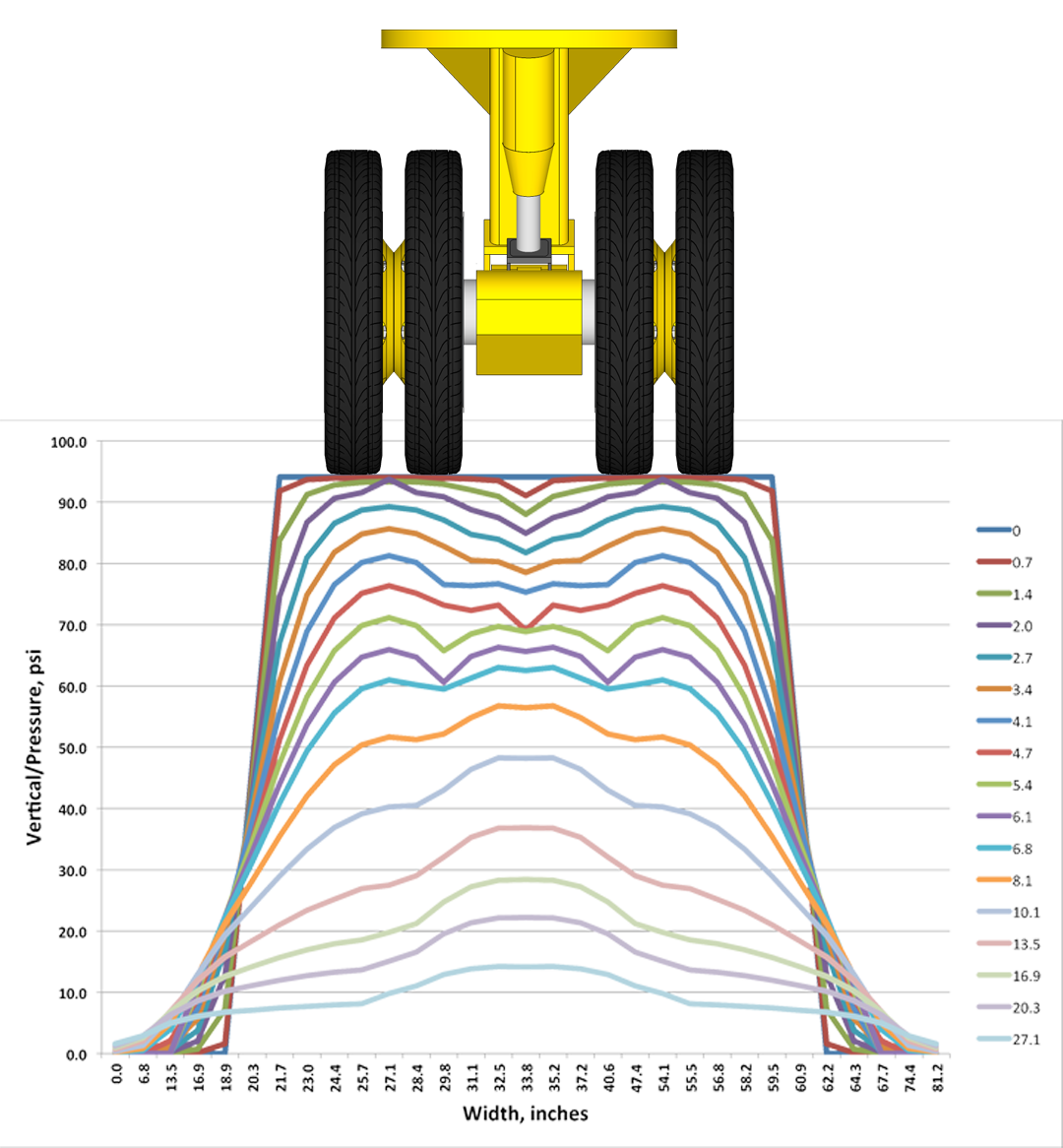
Determining the soil mass spatial attenuation (SMSA) begins with determining the tire contact area. So in considering the tire wheel load(s), spacing and contact area, pavement type, and sub-grade layer(s) spatial attenuation as a function of depth using Boussinesq method and charts prepared by Foster and Alvin that are subsequently refined by Alvin for determining stress, strain and deflection at any point in a homogenous soil mass result in an accurate picture of site grade vulnerabilities. However, the practice of laying down steel plate increases the contact area to reduce sub-surface stress and increases tensile and horizontal shear stress at the bottom surface layer as described by (Yoder and Witczak) that is as follows:


“However, a very important fact that should be clearly understood by the reader that even though stiffer material reduce the risk associate with a sub-grade mode of distress, such as shear, the presents of this stiff layer brings about an increase in the tensile stress magnitude at the bottom of this layer as well as a mark increase in the horizontal shear stresses. Thus a subsequent design analysis is required to insure that both the shearing resistance and the flexure resistance of this stiff layer are great enough to sustain these higher stress conditions.”

The transport vehicle crew’s experience for a wet soil condition was to apply a steel plate to increase sub-soil stiffness.   However, the unspecified asphalt road horizontal shear and flexure resistance was not adequate. In addition the sub-grade crushed limestone grave was capable of supporting the transport vehicle loading in wet condition. The important issue is there was no weak sub-grade condition and applying addition stiffness significantly increased asphalt road distress, the “Aha Moment.” The decision was based on only one engineering principle that was common to the crew’s experience that needed the “The 4D Solution” to understand all loading conditions.

https://youtu.be/0nzeEgTC59M

The 4D Solution(s)

https://youtu.be/jb3-o_qZ3O0

In this discussion of what is “The 4D Solutions(s)” let’s begin by considering some historical perspectives. The concept of “An Engineers’ Coffee Break” is based on an open dialogue about an observation that results in a solution. This can be traced back to 17th Century England’s early coffee house traditions. An example of this environment is a notable meeting between three Royal Society members, Christopher Wren, Robert Hooke and Edmond Halley discussion regarding an observation of celestial motion(s) as a function of the “inverse square law,” but needed a proof (The 4D Solution). The Royal Society’s motto is Nullius in Verba (Latin for “Take nobody’s word for it”). Of course the solution was Isaac Newton’s “Philosophiae Naturalis Principia Mathematic,” published July 5, 1686 provided this proof.

The importance of this event is that these discussions about an observation which resulted in the “Principal of Mathematic”, calculus, prediction of Halley’s comet, the “General Theory of Relativity” and so much more. The perspective of this discussion group dynamics is they had an archetype (Edmond Halley), an individual who could connect with others to solve a problem. An archetype can also be a solution method that connects with multiple sources for the best solution. I will call this “The 4D Solution” an analysis technique of an object(s) in motion (space and time). This kind of analysis can be applied to any problem such as failure, fatigue, impact, project planning and etc. This approach has an effect of enhancing the visualization and subsequently a better communication of the problem and possible solution(s).

Here is an example, using “The 4D Solution” in assessing the design feature of commercial building exterior panel design to fail during an internal pressure event. This design condition is intended to prevent excessive building structural damage during an internal over pressure event. Therefore, the structural loading path is simply, the panel acting as a wind sail, transferring the load to the channels that distributed to the adjoining columns. Subsequently, the weak link in the structure is the unequal leg clip-angle. How does this work?

The response of this channel is like a plank spanning over an opening, and as you walk across towards the other side, the plank bows and rocks. As you reach mid-span you achieve the maximum deflection and instability for the load applied. In order to prevent this condition, a stiffness criterion is applied that is based on the tension member length (L) divided by the least radius of gyration ( r = (I/A)1/2 ). Therefore, the actual design’s L/r ratio is about 400 as compared to the industry standard of 240 to 300, member is potential unstable. However, the end condition rotation is restrained by the unequal leg clip-angles. The challenge is this condition exceeds the Euler–Bernoulli beam equation since the clip-angles exceed their material yield strength and results in excess material strain. In this consideration we can apply plastic analysis to define the limiting condition that achieves “Equilibrium”, where the mid-span bending moment is relative to the end span bending moments that achieves full plastic bending condition. This is one of the primary criterion per the, “Plastic Design in Steel – A Guide and Commentary”. This concept was applied to the design of structures as early as 1954 in France and adopted by the American Institute of Steel Construction (AISC), 5th edition 23rd printing, by 1958. This reference is supported by a significant amount of research and testing at Lehigh University Fritz Engineering Laboratory. In addition, this reference is based on an accumulation of reports prepared by the Welding Research Council and American Society of Civil. The basic principles of this approach are to determine the structure’s inherent nature to redistribute the applied loading throughout the structural system based on geometry, component capacity and the following conditions (Section 2.2 Plastic Theory):

1. Mechanism – “Is that sufficient plastic hinges form to allow the structure (or part of) to deform as a mechanism which is compatible with the rest of the restraints.”

2. Equilibrium – “[The] initial yield, the limits of usefulness is the attainment of plastic moments at each of sections evolved in the mechanism motion.”

3. Plastic – “[Is] that moments in excess of plastic limit strength cannot be resisted.”

At this point we have only determined the unequal leg clip-angle plastic condition loading, but not the actual deflection and/or the ultimate strength loading capacity. Therefore, we need to determine the channel axial shorting impact on the plastic strain condition of the unequal leg clip-angles.

The channel’s homogenous condition during the period where the angles are in full plastic deformation can be considered symbolic of a plank on a roller support (pure bending) to determine axial shorting. This is based on the end supports (unequal leg clip-angles) developing a plastic hinge, where stresses have a slight increase due to strain hardening. This stage results in an increase in bend moment due to strain hardening and membrane force in the unequal leg clip-angles and channel. This approach demonstrates the importance of considering axial shortening as a tension action versus just applying lateral/rotational strain beyond the material strength proportional limit (yield strength) response in the inelastic range. The effect of axial shorting action is like a plank on rollers, which is an accurate depiction of the tension force that is applied after plastic hinge(s) formation. This condition is representative of forces beyond the capacity of end restraints and shows the structure’s instability condition due to a moderately large deflection that is not sustainable and amplifies this connection’s failure. The final step was to approximate potential fracture planes locations and affect by using “Voronoi-based Interpolants for Fracture Modelling,” prepared by N. Sukumar and J. E. Bolander, Department of Civil and Environmental Engineering at University of California.

This presentation of the sequence of actions to this structural system and unequal leg clip-angle failure can provide a visualization of the transition between flexure and fracture (space and time) in relationship to a stress block going through linear elastic, plastic and fracture behaviors, is “The 4D Solution” that is intended to provide a dialogue for of this solution.

Some Famous Engineers’ Lost in 2016

In the New Year tradition we celebrate notable individuals who died the previous year. However, the news media tends to recognize generally famous actors and music performers (Inspirers the Soul). So, for the Engineers’ Coffee House Break Blog, we recognize famous Engineers (Creators of Real Things).

I personnel like David Needle, developer of Amiga 1000, who is one of the first to recognize the significance of the gaming industry through graphics and the need to multi-task. Ray Clough’s work on the development of finite element modeling technique is the corner stone for structural analysis today. In contrast to the development of Shell of Revolution that is technically more complicate but efficient and more accurate in determining thicker element’s deformation. For example Seal Shell, developed at the Bettis Atomic Power Laboratory by C. M. Friedrich, September 1961 was used for the design of most U.S nuclear power plants. Finally, Wacław Zalewski a structural engineer who had the opportunity to build big and cool structures.

Note: Thanks to Wikipedia for the resource information that follows:

Some Famous Engineers’ Lost in 2016

Computers:

David Lewis Needle (1947 – February 20, 2016) was a key engineer and co-chief architect in the creation of the Amiga 1000 computer with Jay Miner, Dave Morse, and RJ Mical. He was one of the main designers and developers of the custom chips of the Amiga computer. Later he co-invented the Atari Lynx[1] and the 3DO Interactive Multiplayer with Dave Morse and RJ Mica.

Wesley Allison Clark (April 10, 1927 – February 22, 2016) was an American physicist who is credited for designing the first modern personal computer. He was also a computer designer and the main participant, along with Charles Molnar, in the creation of the LINC computer, which was the first minicomputer and shares with a number of other computers (such as the PDP-1) the claim to be the inspiration for the personal computer.

Rudolf (Rudi) Emil Kálmán (Hungarian: Kálmán Rudolf Emil; May 19, 1930 – July 2, 2016) was a Hungarian-born American electrical engineer, mathematician, and inventor. He was most noted for his co-invention and development of the Kalman filter, a mathematical algorithm that is widely used in signal processing, control systems, and guidance, navigation and control. For this work, U.S. President Barack Obama awarded Kálmán the National Medal of Science on October 7, 2009.

Ray William Clough, (July 23, 1920 – October 8, 2016), was Byron L. and Elvira E. Nishkian Professor of structural engineering in the department of civil engineering at the University of California, Berkeley and one of the founders of the finite element method (FEM). His article in 1956 was one of the first applications of this computational method. He coined the term “finite elements” in an article in 1960. He was born in Seattle.

Jay Wright Forrester (July 14, 1918 – November 16, 2016) was a pioneering American computer engineer and systems scientist. He was a professor at the MIT Sloan School of Management. Forrester is known as the founder of system dynamics, which deals with the simulation of interactions between objects in dynamic systems

Environment:

Leonard “Lynn” L. Northrup Jr. (March 18, 1918 – March 24, 2016) was an American engineer who was a pioneer of the commercialization of solar thermal energy. Influenced by the work of Professor John Yellott, Dr. Maria Telkes, and Harry Tabor, Northrup’s company designed, patented, developed and manufactured some of the first commercial solar water heaters, solar concentrators, solar-powered air conditioning systems, solar power towers and photovoltaic thermal hybrid systems in the United States. The company he founded became part of ARCO Solar, which in turn became BP Solar, which became the largest solar energy company in the world. Northrup was a prolific inventor with 14 US patents.

Weapons of Mass Destruction:

Simon “Si” Ramo (May 7, 1913 – June 27, 2016) was an American engineer, businessman, and author. He led development of microwave and missile technology and is sometimes known as the father of the intercontinental ballistic missile (ICBM). He also developed General Electric’s electron microscope. He has been partly responsible for the creation of two Fortune 500 companies, Ramo-Wooldridge (TRW after 1958) and Bunker-Ramo (now part of Honeywell).

Rolf Heinrich Sabersky (October 20, 1920 – October 24, 2016) was professor emeritus in mechanical engineering at Caltech. He worked with luminaries throughout his career including Apollo M. O. Smith and Theodore von Kármán at Aerojet. James Van Allan sought his expertise for the development of the Ajax and Bumblebee rocket programs.

Aeronautical or Just a Big Ass Airplane:

Joseph FrederickJoeSutter (March 21, 1921 – August 30, 2016) was an American engineer for the Boeing Airplane Company and manager of the design team for the Boeing 747 under Malcolm T. Stamper, the head of the 747 project.[3] Smithsonian Air and Space Magazine has described Sutter as the “father of the 747”.

Hero:

Haakon Sørbye (16 March 1920 – 15 September 2016) was a Norwegian engineer and resistance member during World War II. He was a member of the radio group Skylark B during the war. After the war he was a professor at the Norwegian Institute of Technology.

Space Explorer:

Joseph Vincent Charyk (September 9, 1920 – September 28, 2016) was widely credited as the founder of the geosynchronous communications satellite industry. He was born in Canmore, Alberta in a Ukrainian family. Early in his career, Charyk consolidated the Central Intelligence Agency, United States Air Force, and United States Navy space programs into the National Reconnaissance Office (NRO). He brought the first United States imagery satellite, CORONA, into operation and demonstrated signals intelligence technology from space. During his tenure, the NRO operated the U-2 reconnaissance aircraft and managed development of the A-12.

Raymond L. Heacock (January 9, 1928 – December

20, 2016) was an American engineer who spent his career at NASA‘s Jet Propulsion Laboratory where he worked on the Ranger program[1] in the 1960s and on the Voyager program in the 1970s and 1980s.[2][3][4] A Caltech engineering graduate, he was the winner of the James Watt International Medal for 1979.

Cool Cars:

Paul Rosche (1 April 1934 – 15 November 2016) was a German engineer known for his work at BMW. He is notable for designing the engines of a number of BMW’s high-performance models, including the M31 found in the BMW 2002 Turbo, the S14 for the E30 M3, the M12 for the 320i Turbo and the Brabham BT52, the M88 in the M1 and the S70/2 found in the V12 LMR and the McLaren F1. 

Builder of Big Cool Things:

Wacław Piotr Zalewski (25 August 1917 – 29 December 2016) was a Polish construction engineer and designer, creator of innovative buildings such as Spodek in Katowice, “Supersam” in Warsaw from the roof of the structure funikularnej,[clarification needed] or train station in Katowice. He is Professor Emeritus of Structural Design at MIT.

Simply a Ring of Ideas

I had an opportunity recently to attend a conference/expo with my son that markedly demonstrated a change in the dynamics of exchanging information. However, this was not a traditional engineering and/or technology conference, but in retrospect it could have been. This conference was the Rooster Teeth Expo (RTX) in Austin, TX July 2016 with 60,000 in

RTX 2016 App
RTX 2016 App

attendance. Roster Teeth is on-line content developer for game discussions (podcasts), live action shorts, game play (Lets Play Live), animation (RWBY) and recently a full-length film (Laser Tag, full funded by Kickstarter). This event was well managed and had a slue of guardians (reference to the Holo 5 game as volunteers that provide assistance to the RTX participants). The enthusiasm and energy was off the chart. In addition, RTX provided an App as a personal guide to the conference proceedings and event activities.

The participants ranged from the Baby Boomer to Millennial and subsequent discussion provided striking differences and commonality to today’s current engineering conference. The “Bracket Studio: YouTube Gaming & Editing for Beginners” panel had a conversation with a young man from southern Texas who described himself as having a learning disability, but was clearly computer literate and quite versed with computer, animation, modeling, lighting, camera, etc. and engaged not just with games, but with the technology. At the “RT Animation: 3D Modeling” panel, I met a programmer for a brokerage firm in Chicago who had been attending the RTX for the last three years with his son and was intrigued by the Internet content development process. Finally, at the “RT Animation, RWBY Animation” I also sat by a middle school librarian from Missouri who used YouTube and Internet content to engage students in reading and developing their self-learning skills.

This RTX event demonstrates a change in regards to the exchange of ideas and information for the Generation X and Millennials versus a typical engineering (Baby Boomers) conference. For example, J. Lyell. Wilson presented an article called “The S.S. “Leviathan,” Damage, Repairs and Strength Analysis” at the general meeting of The Society of Naval Architects and Marine Engineers, held in New York, November 1930. I selected this article since it represents the earliest design basis principles for the Nuclear and Commercial Pressure Vessel and Components code criteria. In addition, the published article includes an open dialogue (Traditionalists) from the participants of the general meeting, much like a current blog(s). My own experience of these current conference, articles, journals, etc. is the lack of an open dialogue (Baby Boomers), only reviewed by a few society members, do not present the subsequent discussion(s) on the content and general considered as an expert technical findings.

An example of this change from a open to exclusive dialogue is how the nuclear plants’ original operating license was adopted by the Atomic Energy Commission (AEC), established in 1947 (Traditionalists) that is based on an open dialogue versus the current Nuclear Regulatory Commission (NRC) reorganized in 1974 is based on an exclusive dialogue or rule based. The establishment of AEC resulted in the first commercial nuclear reactor within 10 years and by 1980 the number new reactors peaked at 109. The current NRC’s exclusive dialogue or rule based as a method for information exchange on design criteria is the direct result of the USA’s inability to construct the new generation nuclear plant as being unaffordable. Bloomberg Business wrote, “Even as sympathetic an observer as John Rowe [former chair of the U.S.’s largest nuclear utility] warns that the new units at Vogtle will be uneconomical when — or if — they’re completed.” (Article: “The Nuclear Industry Prices Itself Out Of the Market For New Power Plants”)

Let’s consider these differences. An open dialogue is an inclusive method that engages everyone in the audience without concerns of being rejected. This also provides an exchange of concepts/ideals that would be rejected since it conflicts with a normal/standard premise. In this environment, all things are considered, probably based on the perspective view of each individual and subsequently resolved into what is practical. The example of this is J. Lyell Wilson’s paper that is still the current (eighty-six years, with some enhancements) method for determining the allowable number of cycles and/or component life cycles, prior to failure. The example of change from the AEC to NRC as method of communicating technical issues has failed from a process of the exclusive dialogue to a forced directive (NRC Orders) that has resulted in no real solutions and marks the failure of the process.

For me, attending the RTX was enlightening to see the enthusiasm, creativity and resurfacing of an open dialog. I consider that both Albert Einstein and J. Robert Oppenhenimer both understood that concepts and/or technology are simply a ring of ideas that are formulated into a practical solution at the time and achieves the next evolution of development.